Straits Times Index Rises Amid Oil Surge and Regional Market Resilience
· Market News · MarketsFN Team
Straits Times Index Rises Amid Oil Surge and Regional Market Resilience
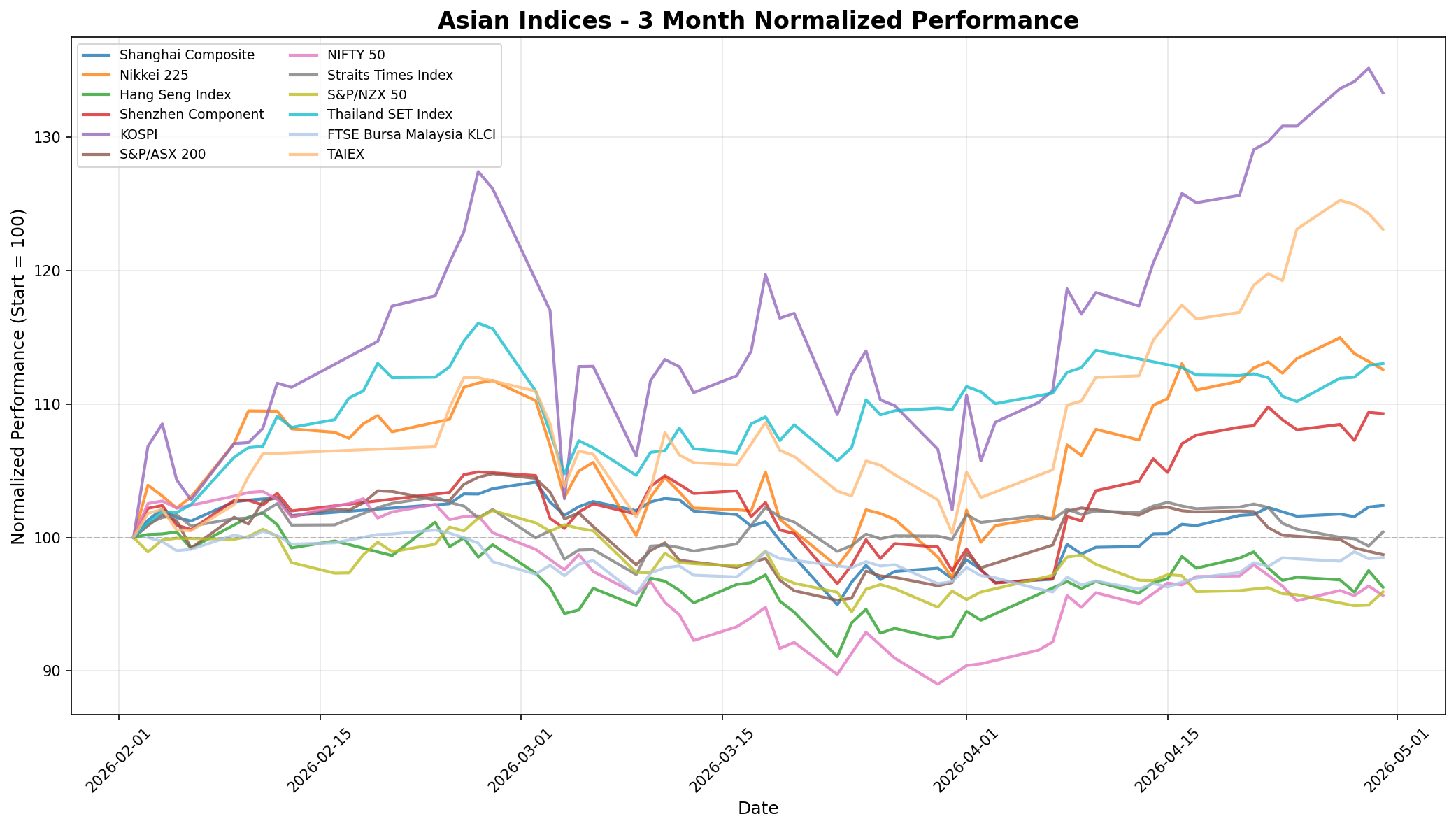
Note: This analysis covers the Asian trading session close for April 30, 2026. All times are in US Eastern Time (ET).
📊 Asian Indices Performance
| Index | Price | Daily Change (%) |
|---|---|---|
| Shanghai Composite | 4,112.16 | +0.11% |
| Nikkei 225 | 59,284.92 | -1.06% |
| Hang Seng Index | 25,776.53 | -1.28% |
| Shenzhen Component | 15,107.55 | -0.09% |
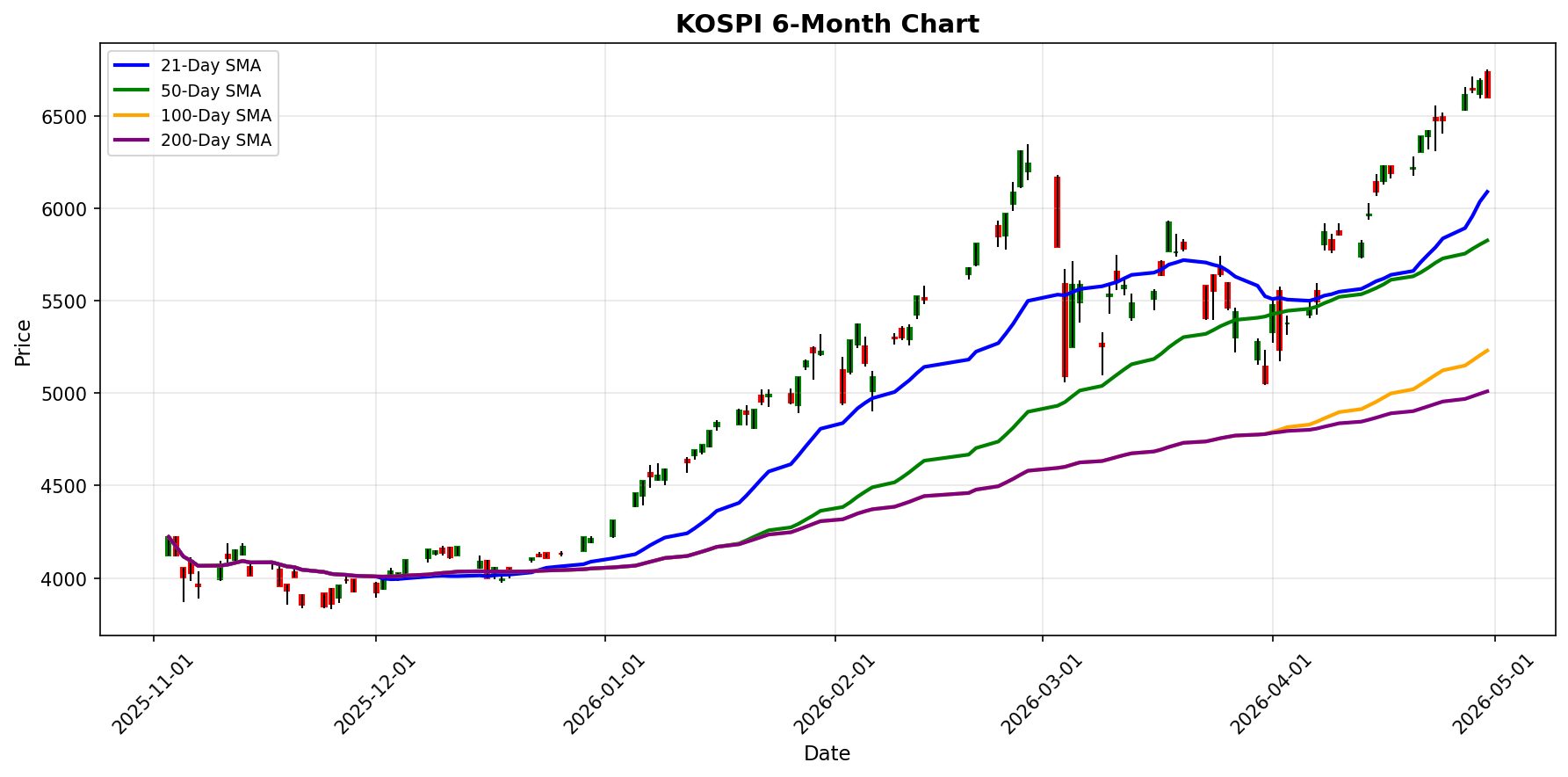
| KOSPI | 6,598.87 | -1.38% |
| S&P/ASX 200 | 8,665.80 | -0.24% |
| NIFTY 50 | 23,997.55 | -0.74% |
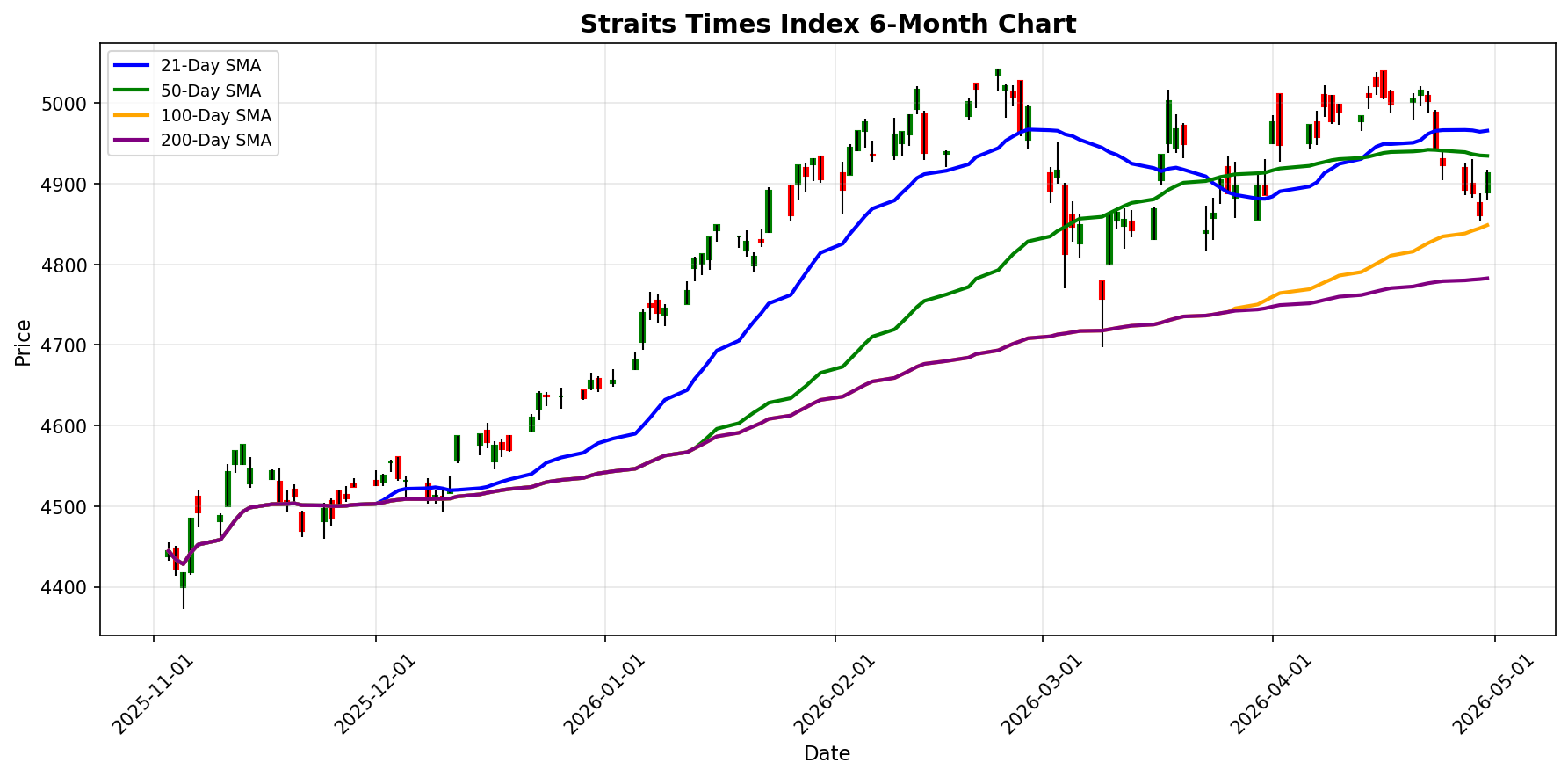
| Straits Times Index | 4,912.69 | +1.06% |
| S&P/NZX 50 | 12,903.31 | +1.04% |
| Thailand SET Index | 1,493.69 | +0.13% |
| FTSE Bursa Malaysia KLCI | 1,722.02 | +0.09% |
| TAIEX | 38,926.63 | -0.96% |
📰 Market Commentary
As of April 30, 2026, the Asian markets are experiencing mixed performance influenced by various geopolitical and economic factors. ### Key Events Impacting Asian Indices 1. **Geopolitical Tensions**: The ongoing conflict involving Iran, particularly the potential for a prolonged US naval blockade of the Strait of Hormuz, has led to a surge in crude oil prices, reaching a four-year high. This development is creating uncertainty in the markets, particularly affecting indices sensitive to energy prices. 2. **Corporate Governance Issues in China**: The trial of former CSRC chairman Yi Huiman on bribery charges is raising concerns about governance and regulatory stability in China's financial markets, which may impact investor confidence. ### Market Sentiment and Price Movements - **Mixed Market Performance**: The overall sentiment in Asian markets is cautious, with several major indices posting declines. The Nikkei 225 and Hang Seng Index fell by 1.06% and 1.28%, respectively, reflecting investor concerns over geopolitical risks and economic stability. The KOSPI also declined by 1.38%, despite optimism surrounding the tech sector. - **Positive Movements in Select Indices**: In contrast, the Straits Times Index and S&P/NZX 50 showed resilience, gaining 1.06% and 1.04%, respectively. This suggests that some markets are benefiting from local economic conditions or sector-specific performance, particularly in areas like commodities and technology. ### Regional Economic Developments 1. **Japan Airlines' Record Sales**: Japan Airlines reported a 9.1% increase in revenue for FY 2025, reaching a record high of 2.01 trillion yen, driven by strong travel demand. This positive corporate performance may bolster investor sentiment in Japan's travel and tourism sector. 2. **China's Manufacturing Activity**: The official purchasing managers' index (PMI) for China indicated a slight improvement, coming in at 50.3, which is above expectations but signals a slowdown in growth as new orders soften. This mixed signal could influence market perceptions regarding China's economic recovery. 3. **India's IT Sector Challenges**: The impact of artificial intelligence on India's IT sector is becoming apparent, with reduced mass hiring posing risks to future economic momentum. This development could have broader implications for consumer spending and economic growth in India. In summary, as of April 30, 2026, Asian markets are navigating a complex landscape characterized by geopolitical tensions, corporate governance issues, and mixed economic signals. While certain indices show resilience, the overall market sentiment remains cautious amid these challenges.
📅 Economic Calendar - Asian Session
All times are in US Eastern Time (ET)
| Date | Time | Cur | Imp | Event | Actual | Forecast |
|---|---|---|---|---|---|---|
| 2026-04-30 | 19:30 | 🇯🇵 | Medium | Tokyo Core CPI (YoY) (Apr) | 1.8% |
On April 30, 2026, traders should closely monitor the release of the Tokyo Core CPI (YoY) data for April, scheduled for 19:30 ET. The forecast for this key inflation indicator is set at 1.8%. As of now, the actual figure has not been released, so traders should be prepared for potential volatility in the Japanese yen (JPY) and Japanese equities depending on whether the actual CPI aligns with, exceeds, or falls short of the forecast. A higher-than-expected CPI could signal rising inflationary pressures, potentially prompting the Bank of Japan to reconsider its monetary policy stance, which may lead to a strengthening of the yen and a positive reaction in Japanese indices. Conversely, an actual CPI below the forecast could reinforce the current accommodative monetary policy, possibly resulting in a weaker yen and negative sentiment in the markets. In summary, the Tokyo Core CPI release is critical for gauging inflation trends in Japan and will likely have significant implications for market movements in Asian indices, particularly those linked to the Japanese economy. Traders should remain vigilant for the actual release and adjust their strategies accordingly.
📈 Index Performance Charts
Best Performer: Straits Times Index
Worst Performer: KOSPI
💱 FX, Commodities & Crypto
**Market Summary: FX Pairs, Commodities, and Cryptocurrencies** **FX Pairs Performance:** - **USD/JPY**: The pair experienced a significant decline of 2.54%, reflecting potential shifts in monetary policy or market sentiment impacting the Japanese yen. - **USD/CNY**: A modest decrease of 0.17% suggests stability in the Chinese yuan, with market participants likely weighing economic data and geopolitical factors. - **AUD/USD**: The Australian dollar strengthened by 0.66%, potentially driven by positive commodity prices and strong economic indicators from Australia. - **NZD/USD**: The New Zealand dollar also gained, up 0.72%, likely influenced by similar factors affecting the Australian dollar. **Market Drivers**: The movements in FX pairs are primarily influenced by interest rate expectations, economic data releases, and geopolitical developments. The strong performance of commodity currencies (AUD and NZD) indicates robust demand for commodities, while the drop in USD/JPY points to shifts in investor sentiment. --- **Commodities Performance:** - **Gold**: Priced at $4,643.60, gold rose by 2.16%, likely driven by increased demand for safe-haven assets amid market volatility and inflation concerns. - **Silver**: Silver surged by 3.71% to $74.22, reflecting similar safe-haven buying and possibly industrial demand factors. - **Crude Oil (WTI)**: Crude oil prices fell by 2.26% to $104.46, influenced by concerns over demand due to economic slowdowns and potential oversupply issues. **Market Drivers**: The commodities market is being shaped by geopolitical tensions, inflationary pressures, and changing
Currency Pairs
| Pair | Price | Daily Change (%) |
|---|---|---|
| USD/JPY | 156.25 | -2.54% |
| USD/CNY | 6.83 | -0.17% |
| AUD/USD | 0.72 | +0.66% |
| NZD/USD | 0.59 | +0.72% |
Commodities
| Commodity | Price | Daily Change (%) |
|---|---|---|
| Gold | $4643.60 | +2.16% |
| Silver | $74.22 | +3.71% |
| Crude Oil (WTI) | $104.46 | -2.26% |
Cryptocurrencies
| Asset | Price | Daily Change (%) |
|---|---|---|
| Bitcoin | $76,082 | +0.40% |
| Ethereum | $2,266 | +0.56% |
Disclaimer
The content on MarketsFN.com is provided for educational and informational purposes only. It does not constitute financial advice, investment recommendations, or trading guidance. All investments involve risks, and past performance does not guarantee future results. You are solely responsible for your investment decisions and should conduct independent research and consult a qualified financial advisor before acting. MarketsFN.com and its authors are not liable for any losses or damages arising from your use of this information.