The Infrastructure of a Spacefaring Civilization: A Financial Analysis of the SpaceX IPO
MarketsFN Editorial
The Infrastructure of a Spacefaring Civilization: A Deep-Dive Financial Analysis of the SpaceX IPO
Published: June 08, 2026 · MarketsFN Editorial · Ticker: SPCX (Nasdaq)
The filing of the S-1 registration statement for Space Exploration Technologies Corp. marks a definitive shift in global capital markets. Seeking a listing on Nasdaq and Nasdaq Texas under the ticker SPCX, SpaceX is not merely presenting a business plan — it is presenting a blueprint for a Kardashev Type II civilization.
Corporate Structure: Concentrated Command
SpaceX is entering the public market as a controlled company. Upon completion of the offering, founder Elon Musk will hold approximately 85.1% of combined voting power through his ownership of Class B shares. This structure insulates the company's multiplanetary mission from short-term shareholder pressure, but presents significant key-person risk.
| Share Class | Votes per Share | Holder | Notes |
|---|---|---|---|
| Class A | 1 vote | Public investors | Shares being offered in IPO |
| Class B | 10 votes | Elon Musk (~85.1%) | Permanent board majority |
The Three Business Segments
| Segment | Key Asset | Key Metric | Status |
|---|---|---|---|
| Space | Falcon 9 / Starship | 80%+ of world mass to orbit | 99%+ mission success rate |
| Connectivity | Starlink (9,600 satellites) | 10.3M subscribers | $7.17B Segment EBITDA (2025) |
| AI | xAI / Grok (acq. Feb 2026) | 100 GW orbital compute goal | $12.73B CAPEX in 2025 |
Segment 1: Space — The Launch Monolith
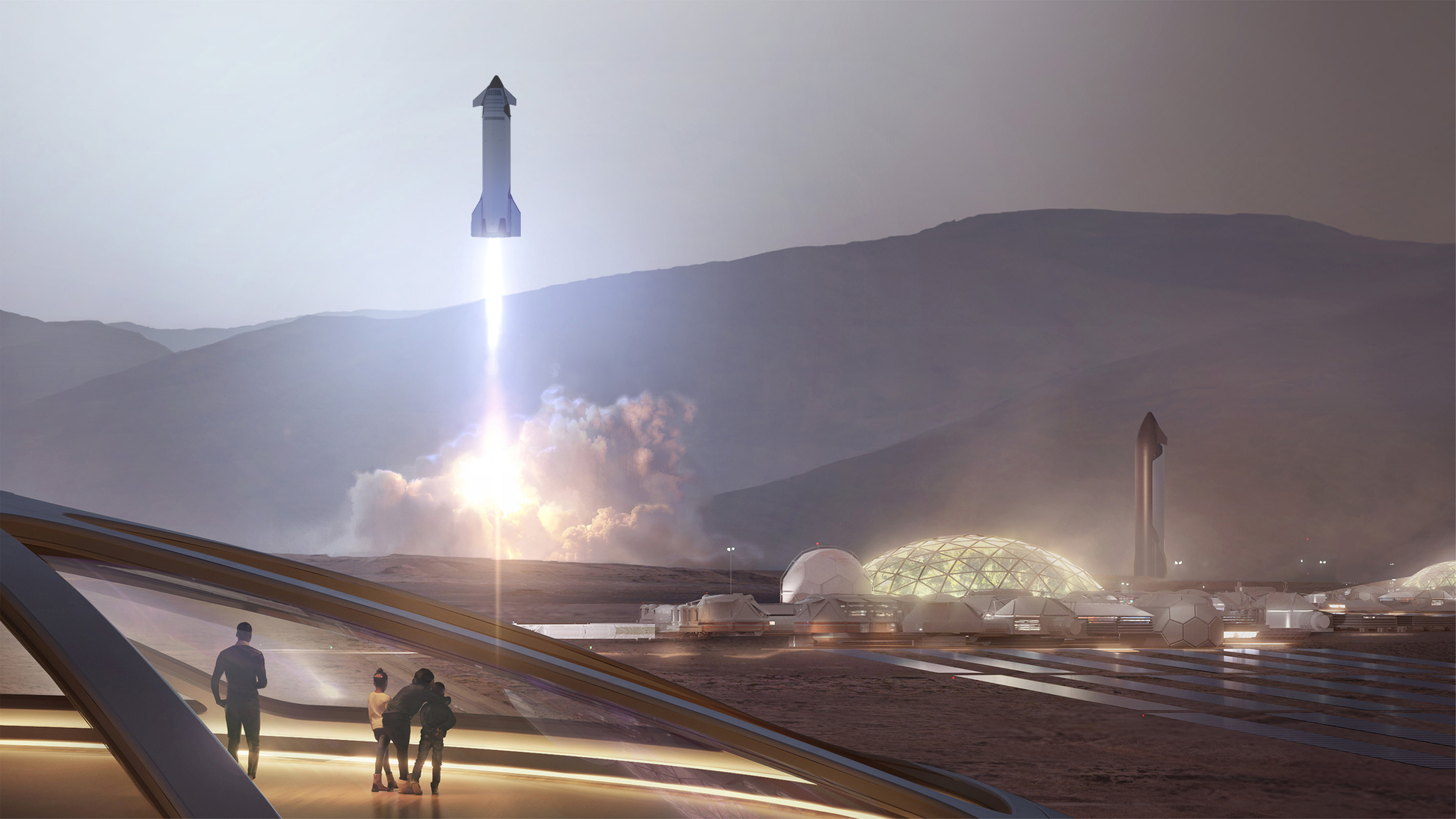
SpaceX's foundational advantage is its virtual monopoly on mass to orbit. The Falcon 9 and Falcon Heavy have already revolutionised launch economics, but the company's entire future growth thesis hinges on Starship V3, designed to deliver 100 metric tons to orbit in a fully reusable configuration.
| Vehicle | Cost per kg to Orbit | Payload to LEO | Reusability |
|---|---|---|---|
| Industry Average (Pre-SpaceX) | ~$18,500 | — | None |
| Falcon 9 | ~$2,700 | 22.8 t | Partial (booster) |
| Starship V3 (target) | <$100 (est.) | 100+ t | Full (both stages) |
Segment 2: Connectivity — The Starlink Utility
Starlink is currently SpaceX's primary profit engine. In a bold spectrum gambit, SpaceX entered into a $19.6 billion agreement with EchoStar — $11.1 billion payable in Class A stock and $8.5 billion to retire EchoStar debt — to acquire AWS-4 and H-Block spectrum licenses, enabling 5G-like direct-to-smartphone connectivity globally.
Segment 3: AI — Orbital Intelligence
The February 2026 acquisition of xAI transformed SpaceX into a vertically integrated AI powerhouse. The AI segment operates Grok, a frontier model fed by real-time data from the X platform (350 million daily posts). SpaceX's thesis is that terrestrial power grids cannot satisfy AI demand — so it plans to launch 100 gigawatts of orbital AI compute capacity annually, leveraging Sun-synchronous orbit for near-constant solar energy and radiative cooling.
Already, Anthropic has contracted $1.25 billion per month through 2029 for access to the Colossus and Colossus II data centres — providing a significant revenue floor for the AI segment.
"Future Markets": The Frontier Roadmap
| Project | Description | Partners / Value |
|---|---|---|
| Lunar Mass Driver | Electromagnetic launch system on the Moon — no rockets required | SpaceX sole |
| Terafab | World's largest chip factory — 1 terawatt annual compute production | Tesla + Intel |
| Macrohard | Fully AI-operated software company (agentic platform) | SpaceX sole |
| Cursor (Anysphere) | AI-assisted coding — mission-critical data source for Grok | Option at $60B valuation |
Financial Snapshot: Growth vs. Burn
The narrative is expansive, but the financials reveal the cost of such ambition. The company swung from a $791 million net profit in 2024 to a $4.94 billion net loss in 2025 — driven almost entirely by AI segment R&D and GPU depreciation. The Connectivity segment remains the financial backbone.
| Metric | Value | Notes |
|---|---|---|
| Net Loss (2025) | −$4.94B | vs +$791M profit in 2024 |
| Accumulated Deficit | −$41.31B | As of March 2026 |
| Total CAPEX (2025) | $20.74B | $12.73B to AI segment alone |
| Cash & Equivalents | $15.85B | Strong liquidity buffer |
| Total Debt (principal) | $29.13B | Net debt: ~$13.3B |
| Connectivity EBITDA (2025) | $7.17B | Starlink segment — primary profit engine |
| Anthropic Contract | $1.25B/month | Through 2029 — Colossus I & II |
| TAM Estimate | $28.5T | Company's total addressable market claim |
Key Risks for Investors
- Governance lock-in: Public investors have virtually no influence. Musk's Class B Directors control the board indefinitely.
- Regulatory volatility: The 2024 seizure of Starlink assets in Brazil illustrates how Musk's non-SpaceX actions can directly impair SpaceX assets.
- Technical failure: A single mission failure or cascading debris event in LEO could impair billions in assets.
- AI legal exposure: Grok's image-generation features face active lawsuits and an Irish DPC inquiry on GDPR compliance.
- Capital intensity: $20B+ annual CAPEX with a $41B accumulated deficit requires sustained access to capital markets.
The Analyst's Verdict
An investment in SPCX is not a bet on a satellite company or a defence contractor. It is a bet on the SpaceX Repeatable Business Model — the application of first-principles engineering to the most fundamental constraints of physics, economics, and energy. With a TAM estimated at $28.5 trillion and the Starlink segment already generating $7 billion in annual EBITDA, the upside case is without modern precedent.
But that opportunity comes with equally unprecedented risk: over $20 billion in annual CAPEX, a $41 billion deficit, and the singular decisions of one founder who holds 85% of the votes. For investors who can tolerate the asymmetry, SpaceX offers the rarest commodity in public markets — the chance to own the core infrastructure of the 21st and 22nd centuries.
Disclaimer
The content on MarketsFN.com is provided for educational and informational purposes only. It does not constitute financial advice or investment recommendations. All investments involve risk and past performance does not guarantee future results. This article is based on publicly available S-1 filing information.