Asian Markets Retreat as Nikkei Dips Below 70,000 Amid Economic Concerns
MarketsFN Team
Asian Markets Retreat as Nikkei Dips Below 70,000 Amid Economic Concerns
Note: This analysis covers the Asian trading session close for June 23, 2026. All times are in US Eastern Time (ET).
📊 Asian Indices Performance
| Index | Price | Daily Change (%) |
|---|---|---|
| Shanghai Composite | 4,106.25 | -1.37% |
| Nikkei 225 | 69,788.38 | -3.55% |
| Hang Seng Index | 23,336.28 | -1.82% |
| Shenzhen Component | 15,854.20 | -3.17% |
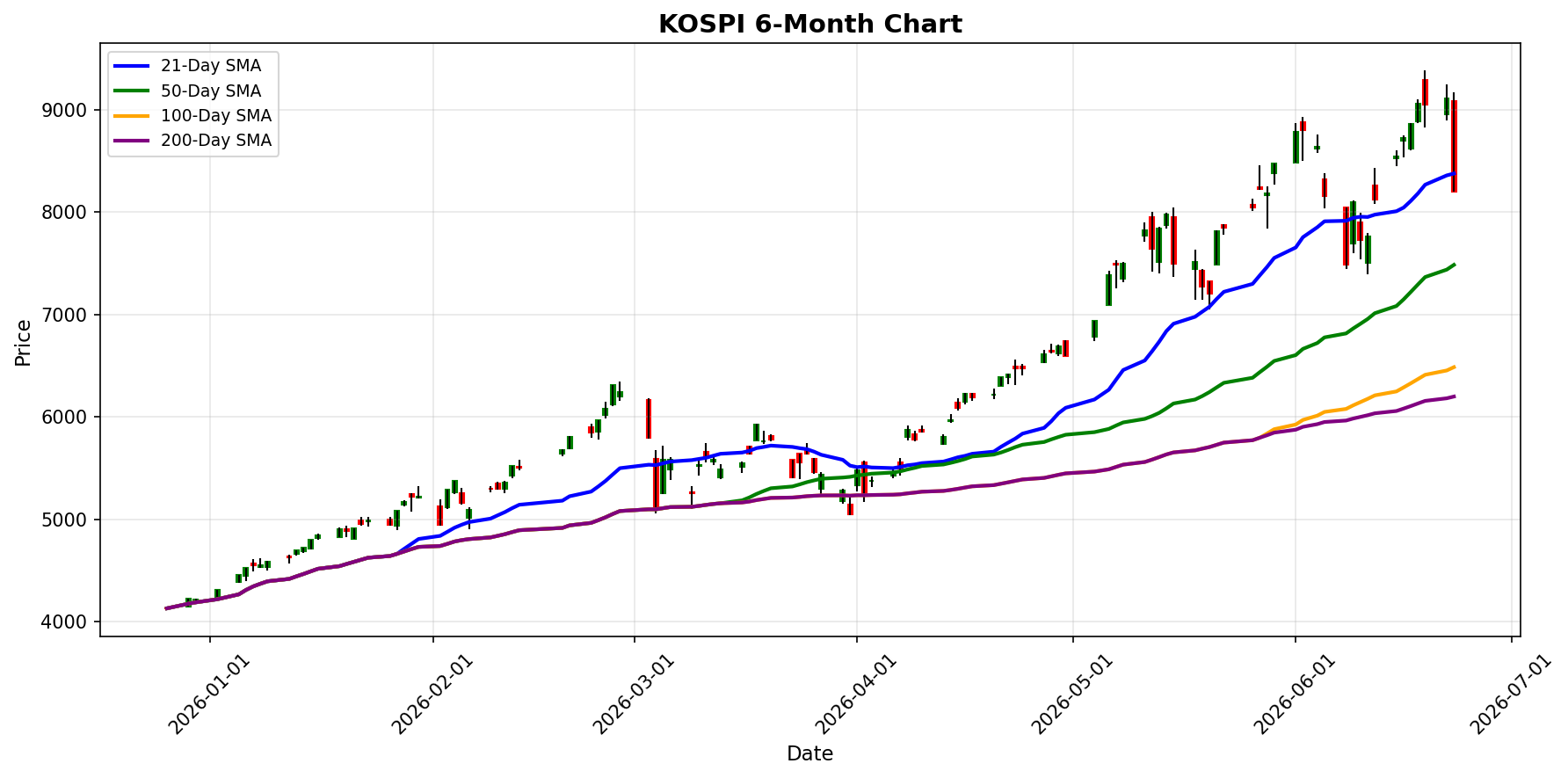
| KOSPI | 8,203.84 | -9.99% |
| S&P/ASX 200 | 8,787.00 | -0.33% |
| NIFTY 50 | 23,881.95 | -0.92% |
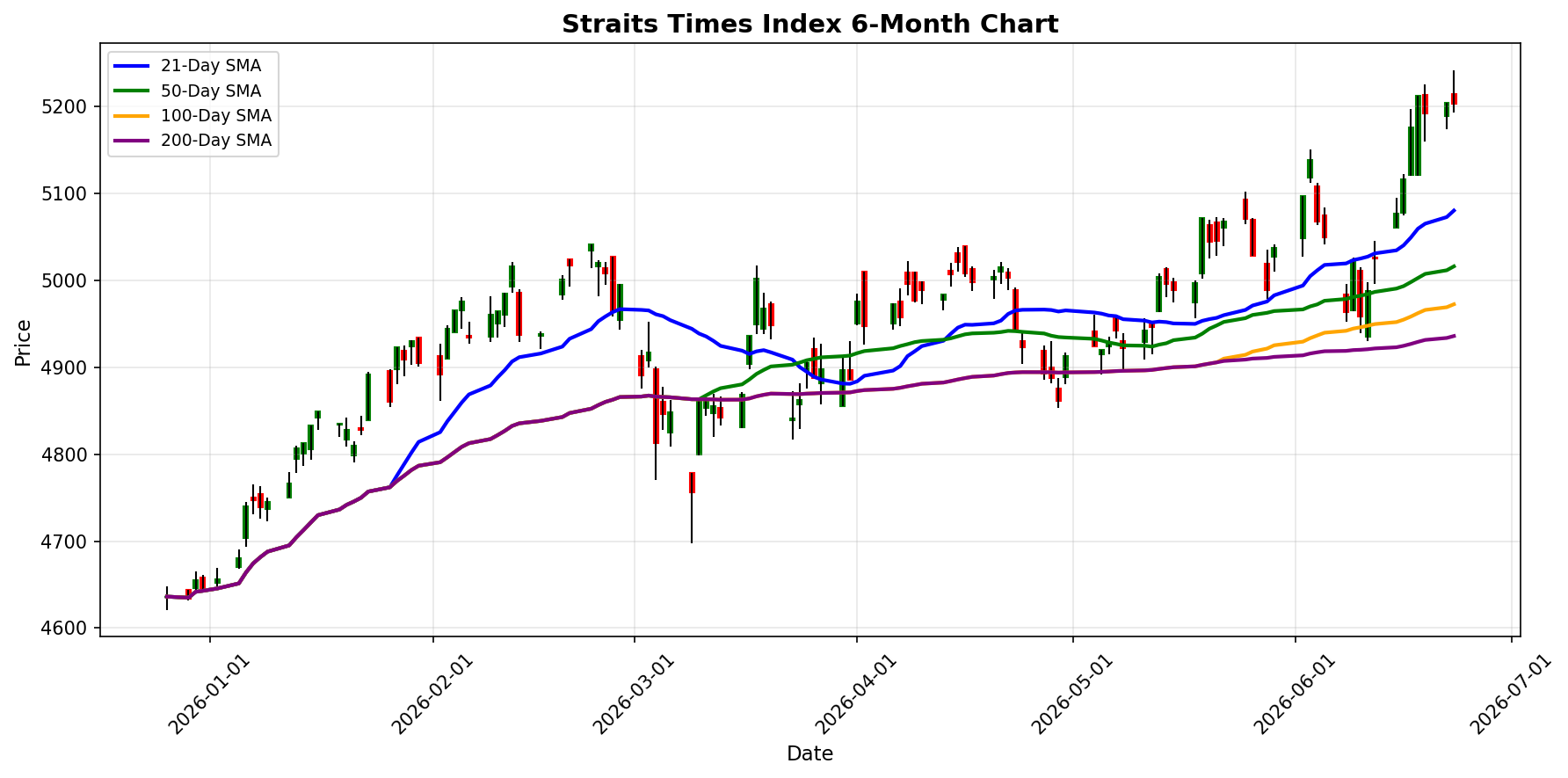
| Straits Times Index | 5,203.85 | -0.00% |
| S&P/NZX 50 | 13,435.77 | -0.08% |
| FTSE Bursa Malaysia KLCI | 1,679.92 | -1.23% |
| TAIEX | 47,100.65 | -1.34% |
📰 Market Commentary
**Asian Market Summary – June 23, 2026** **Key Events Impacting Asian Indices:** Today, Asian markets experienced significant declines, with the Nikkei 225 leading the downturn, closing below the 70,000 mark after an eight-day winning streak. Concerns over potential overheating in the Japanese economy have prompted investors to reassess their positions, leading to a 3.55% drop in the Nikkei. Other indices, including the KOSPI (-9.99%) and Shenzhen Component (-3.17%), also faced substantial losses, reflecting a broader regional sell-off. **Market Sentiment and Price Movements:** Market sentiment across Asia has turned negative, influenced by a combination of local economic concerns and global market trends. The Hang Seng Index fell by 1.82%, while the Shanghai Composite dropped 1.37%. The KOSPI's nearly double-digit decline signals heightened anxiety among investors, possibly exacerbated by external factors such as the recent volatility in U.S. markets, where tech stocks have been under pressure due to rising bond yields. This global context has led to a synchronized retreat in Asian equities, with many indices closing in the red. **Regional Economic Developments:** In Japan, the government's decision to increase visa fees significantly is expected to impact Chinese tourist inflows, potentially straining already tense relations between Japan and China. This policy change could further dampen consumer spending and travel-related sectors in Japan. In China, the upcoming release of gaokao results is creating a climate of uncertainty for families as they navigate university admissions. Additionally, the pause on Zijin Mining's acquisition of Allied Gold reflects growing caution within China regarding foreign investments, particularly in Africa, as regulators scrutinize potential risks. On a more positive note, Hong Kong-based fintech company FundPark has expanded its financing facility with HSBC, which could enhance support for small and medium-sized enterprises (SMEs) in the region. This move indicates a growing demand for innovative funding solutions amid a challenging economic landscape. Overall, the combination of local economic pressures, geopolitical tensions, and global market dynamics has led to a pronounced decline in Asian indices today, reflecting a cautious outlook among investors.
📅 Economic Calendar - Asian Session
All times are in US Eastern Time (ET)
| Date | Time | Cur | Imp | Event | Actual | Forecast |
|---|---|---|---|---|---|---|
| 2026-06-23 | 01:00 | 🇯🇵 | Medium | BoJ Core CPI (YoY) | 2.7% | |
| 2026-06-23 | 01:00 | 🇸🇬 | Medium | Core CPI (YoY) (May) | 1.40% | 1.60% |
| 2026-06-23 | 01:00 | 🇸🇬 | Medium | CPI (YoY) (May) | 1.8% | 2.0% |
On June 23, 2026, several significant economic data releases from Asian countries have implications for traders, particularly regarding market sentiment and Asian indices. 1. **Bank of Japan (BoJ) Core CPI (YoY)**: - **Actual**: 2.7% - **Forecast**: Not provided - **Analysis**: The BoJ's Core CPI reading indicates persistent inflationary pressures in Japan. A higher-than-expected inflation figure could lead to speculation about potential monetary policy adjustments, impacting the Japanese yen and Nikkei index. Traders should monitor for any shifts in BoJ's stance on interest rates, which could lead to increased volatility in the JPY and related equities. 2. **Singapore Core CPI (YoY) (May)**: - **Actual**: 1.40% - **Forecast**: 1.60% - **Analysis**: The Core CPI in Singapore came in below expectations, suggesting weaker inflationary pressures than anticipated. This could lead to a reassessment of the Monetary Authority of Singapore's (MAS) monetary policy approach. A lower inflation rate may support the Singapore dollar but could also dampen bullish sentiment in the Singapore stock market, particularly if it raises concerns about economic growth. 3. **Singapore CPI (YoY) (May)**: - **Actual**: 1.8% - **Forecast**: 2.0% - **Analysis**: Similar to the Core CPI, the overall CPI also fell short of forecasts, indicating that inflation is moderating. This could have implications for consumer spending and economic growth in Singapore, potentially leading to a cautious outlook among investors. The Straits Times Index may experience downward pressure as traders digest these inflation figures. **Market Implications**: - The mixed inflation data from Japan and Singapore suggests a complex economic landscape that traders need to navigate carefully. The stronger-than-expected BoJ Core CPI could bolster the yen, while the softer
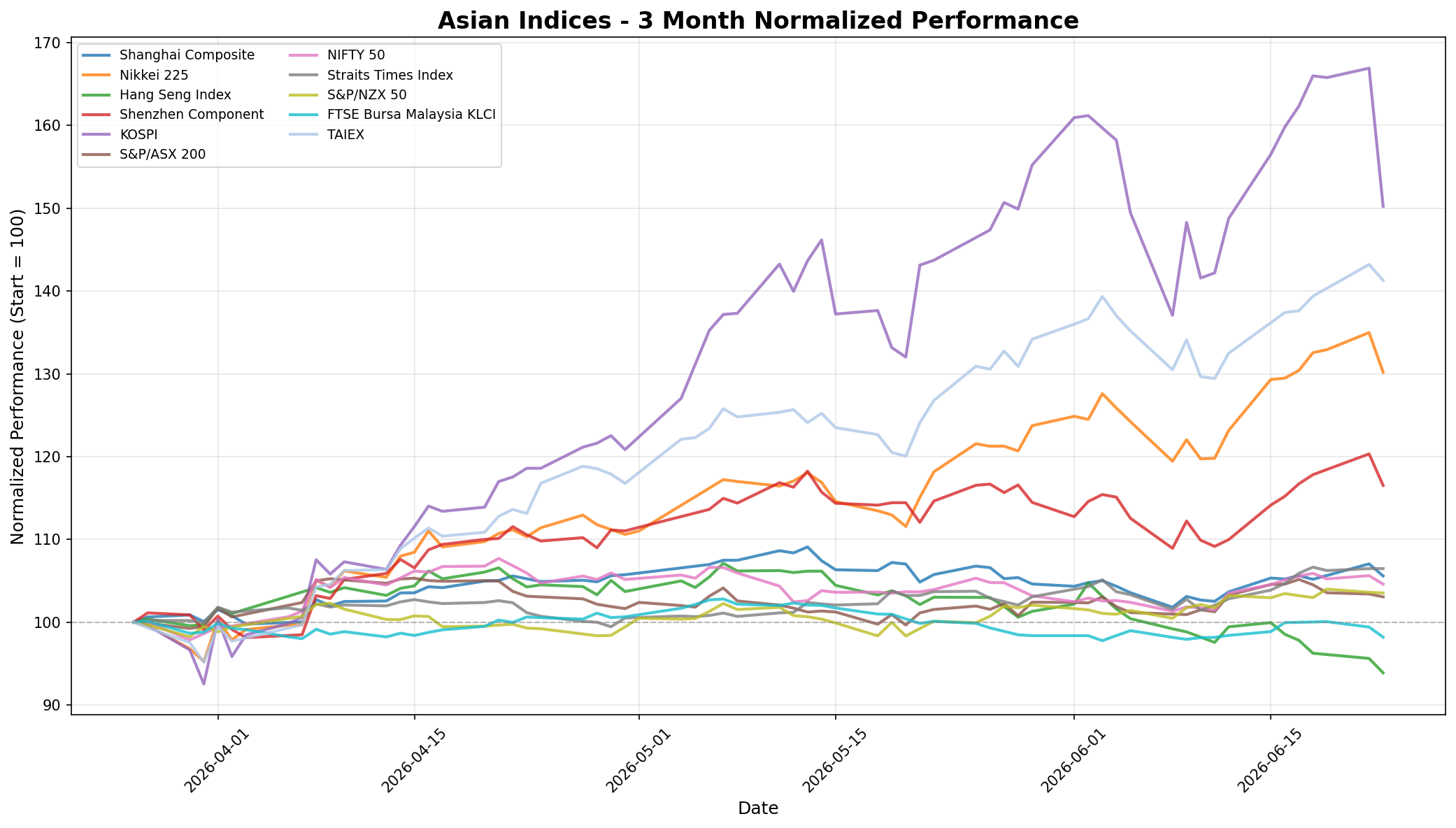
📈 Index Performance Charts
Best Performer: Straits Times Index
Worst Performer: KOSPI
💱 FX, Commodities & Crypto
### FX Market Summary **Key Price Movements:** - **USD/JPY:** The pair is trading at 161.4040, showing a slight decline of 0.08%. - **USD/CNY:** The Chinese yuan has appreciated against the dollar, with the pair at 6.7838, reflecting a daily increase of 0.25%. - **AUD/USD:** The Australian dollar has weakened, trading at 0.6955, down 0.70%. - **NZD/USD:** Similarly, the New Zealand dollar has also declined, now at 0.5690, down 0.54%. **Market Drivers:** The FX market is influenced by various factors, including interest rate differentials, economic data releases, and geopolitical developments. The slight appreciation of the CNY may be attributed to recent positive economic indicators from China, while the declines in AUD and NZD could be linked to weaker commodity prices and concerns over global demand. ### Commodities Market Summary **Key Price Movements:** - **Gold:** Priced at $4,131.40, gold has seen a decline of 1.21%. - **Silver:** The price of silver has dropped significantly to $62.31, down 4.91%. - **Crude Oil (WTI):** Crude oil is trading at $73.62, reflecting a decrease of 1.60%. **Market Drivers:** The commodities market is currently affected by a combination of factors, including shifts in investor sentiment, inflation concerns, and supply-demand dynamics. The decline in gold and silver prices may indicate a move away from safe-haven assets amidst fluctuating economic outlooks. The drop in crude oil prices could be
Currency Pairs
| Pair | Price | Daily Change (%) |
|---|---|---|
| USD/JPY | 161.40 | -0.08% |
| USD/CNY | 6.78 | +0.25% |
| AUD/USD | 0.70 | -0.70% |
| NZD/USD | 0.57 | -0.54% |
Commodities
| Commodity | Price | Daily Change (%) |
|---|---|---|
| Gold | $4131.40 | -1.21% |
| Silver | $62.31 | -4.91% |
| Crude Oil (WTI) | $73.62 | -1.60% |
Cryptocurrencies
| Asset | Price | Daily Change (%) |
|---|---|---|
| Bitcoin | $62,430 | -2.38% |
| Ethereum | $1,652 | -4.33% |
Disclaimer
The content on MarketsFN.com is provided for educational and informational purposes only. It does not constitute financial advice, investment recommendations, or trading guidance. All investments involve risks, and past performance does not guarantee future results. You are solely responsible for your investment decisions and should conduct independent research and consult a qualified financial advisor before acting. MarketsFN.com and its authors are not liable for any losses or damages arising from your use of this information.