The Macroeconomic Mosaic: A Quick Guide to Key Economic Indicators for Investors and Traders
Economics Research Team

The Macroeconomic Mosaic: A Quick Guide to Key Economic Indicators for Investors and Traders
By the Economics Research Team · MarketsFN Economics
Investing without a fundamental understanding of the economy is comparable to embarking on a journey without checking the climate of your destination. Professional institutions adopt a top-down approach to analysis, beginning with a forecast of the general economic climate — including interest rate projections, currency trends, and domestic growth — before looking at individual industries or companies. This economic climate is primarily defined by the business cycle: a recurring fluctuation of expansions, peaks, contractions, and troughs in aggregate economic activity.
Because no two cycles are identical in length or intensity, market participants rely on a core group of consistently reliable indicators to navigate these shifts. These indicators are classified by their timing relative to the cycle:
| Indicator Type | Timing Relative to Cycle | Primary Purpose |
|---|---|---|
| Leading | Change before the economy as a whole | Predict future conditions |
| Coincident | Change at the same time as the economy | Reflect the current state |
| Lagging | Change after the economy as a whole | Confirm a turning point has occurred |
The Broadest Barometer: Gross Domestic Product (GDP)
Gross Domestic Product (GDP) is revered as the most comprehensive barometer of a nation's overall economic condition. It represents the sum of the market values of all final goods and services produced domestically during a specific period. Traders typically use the aggregate expenditure approach:
GDP = C + I + G + (X – M)
| Component | Description | Approx. % of GDP |
|---|---|---|
| Consumption (C) | Personal consumption expenditures on goods and services | ~70% |
| Investment (I) | Gross private domestic investment in equipment, housing, and inventories | ~15% |
| Government (G) | Government consumption expenditures and gross investment | ~20% |
| Net Exports (X–M) | The difference between the value of exports and imports | ~−4% to −5% |
Personal consumption expenditures are the largest component, accounting for roughly 70% of total output. Services currently constitute the largest category of consumer purchases at approximately 59% of all spending. For investors, Real GDP (adjusted for inflation) is more accurate than Nominal GDP because it eliminates price distortions. A critical policy tool is the output gap — the difference between actual GDP and "potential" GDP. A negative gap suggests underutilized resources (high unemployment, low inflation); a positive gap indicates an economy pushed to its limits, potentially sparking price hikes.
The Predictive Power of Composite Indices
Because no single indicator is omnipotent, economists combine several high-accuracy data series into composite indices. The most famous is the Index of Leading Economic Indicators (LEI), designed to signal future trends and turning points.
| Index Type | Components | Key Data Points Included |
|---|---|---|
| Leading (LEI) | 10 | Building permits, stock prices, interest rate spread, consumer expectations |
| Coincident | 4 | Nonfarm payrolls, personal income, industrial production, manufacturing sales |
| Lagging | 7 | Duration of unemployment, inventory-to-sales ratio, prime rate, CPI for services |
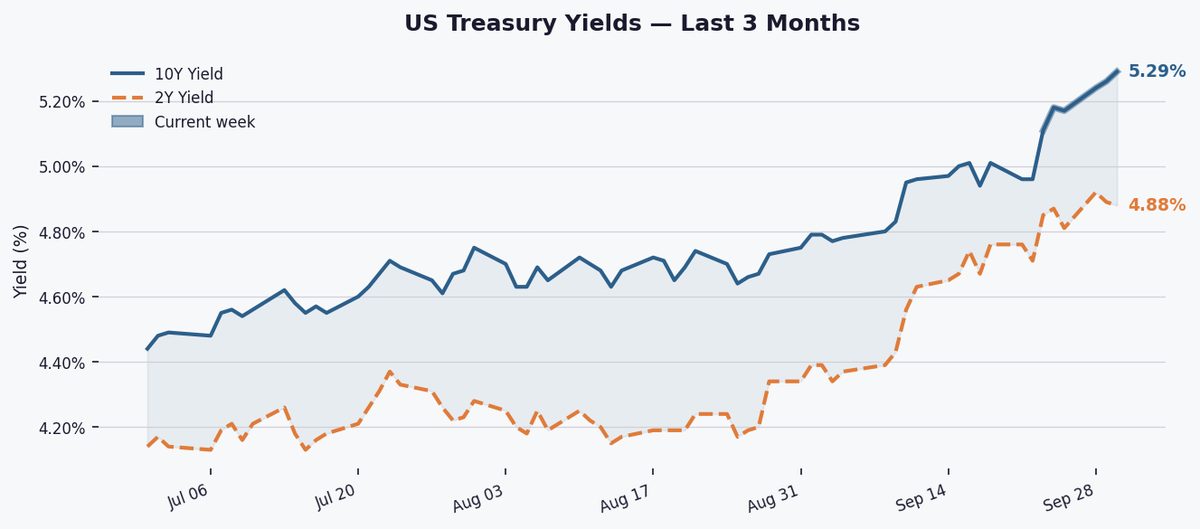
The interest rate spread in the LEI (the difference between 10-year Treasury yields and the federal funds rate) is particularly vital. A normal upward-sloping yield curve indicates favorable conditions, while an inverted yield curve has preceded every recession since 1960. A useful trader insight: monitor the ratio of the coincident index to the lagging index — this ratio often declines before a recession and rises early in a recovery, sometimes with fewer false signals than the LEI itself.
The Market's Heavyweight: The Employment Situation
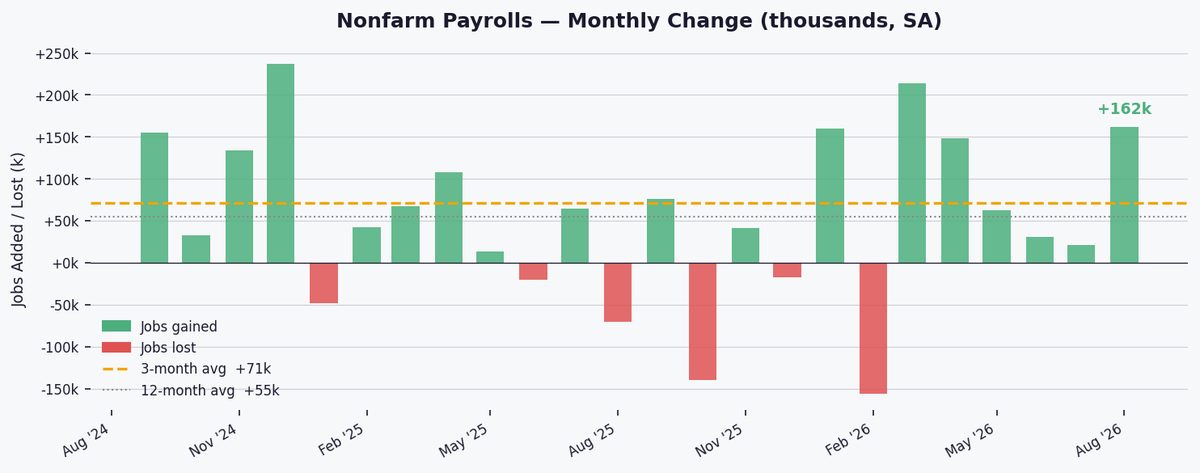
The monthly Employment Situation report, published on the first Friday of every month, is the most market-moving economic release. Hiring decisions reveal how firms view the future — companies will not add payrolls unless they expect a need for extra workers.
| Survey Name | Focus | Key Metrics |
|---|---|---|
| Household Survey | Individuals / Households | Official unemployment rate, labor force participation |
| Establishment Survey | Businesses / Payrolls | Nonfarm payrolls (NFP), average hourly earnings, hours worked |
For traders, the nonfarm payroll (NFP) figure is the headline grabber. When payrolls decline by 150,000 or more, equity markets typically sell off because employment determines income and spending. However, fixed-income markets fear "too much" growth — a falling unemployment rate can spark inflation fears, leading to a bond sell-off and higher yields. A subtle but powerful section is the diffusion indices: readings above 50 suggest broad-based expansion, while sub-50 readings often coincide with recessions.
Measuring Production: ISM and Industrial Output
The Institute for Supply Management (ISM) Indices, particularly the Purchasing Managers' Index (PMI), are highly valued for their timeliness and accuracy. The PMI is a weighted composite based on five diffusion indices:
| PMI Component | Weight | Rationale |
|---|---|---|
| New Orders | 30% | Represents intended purchases; leads production |
| Production | 25% | Measures actual volume of current manufacturing output |
| Employment | 20% | Reflects hiring trends within the manufacturing sector |
| Supplier Deliveries | 15% | Slower deliveries (above 50) indicate high demand |
| Inventories | 10% | Measures levels of materials held by manufacturers |
A PMI reading above 50 indicates expansion; below 50 indicates contraction. Historically, a reading of approximately 46.0 serves as a signal for turning points in the broader business cycle. Parallel to this is the Industrial Production and Capacity Utilization report: a capacity utilization rate above 84% has traditionally been seen as a threshold for bottlenecks that spark inflation, prompting the Federal Reserve to raise interest rates.
Manufacturing Commitments: The M3 Survey & Durable Goods
The Manufacturers' Shipments, Inventories, and Orders (M3) survey provides a detailed look at future commitments. The Advance Report on Durable Goods is particularly market-moving because it measures orders for items intended to last three years or more.
Within this report, the Nondefense Capital Goods excluding Aircraft (NDCGXA) component is a critical proxy for total business investment. Because companies only invest in expensive machinery when they are confident in future demand, trends in NDCGXA can anticipate shifts in the broader economy by three to six months.
Related to orders are Business Inventories. The Inventory-to-Sales (I/S) ratio indicates how many months it would take to liquidate current stock at the current sales pace. A rising I/S ratio over several months often signals that sales are slower than anticipated, frequently presaging a recession.
Housing: The Engine of Growth
Never underestimate the economic importance of new residential construction. While housing directly accounts for only 3% of GDP, its multiplier effect is massive: building 1,000 single-family homes generates nearly 2,500 jobs and millions in government revenue. Housing is typically "first in, first out" (FIFO) in the business cycle, leading both downturns and recoveries.
| Housing Stage | Economic Significance |
|---|---|
| Building Permits | Most forward-looking; included in the LEI |
| Housing Starts | Excavation work begins; owners are financially committed |
| Completions | Final stage; a lag here can signal financial or weather disruptions |
Interest rates are the primary driver of housing. Historically, mortgage rates of 7.25% or lower tend to boost activity. Single-family starts are the ultimate gauge of consumer confidence, as home purchases require long-term job security.
The Consumer's Psychology: Confidence and Sentiment
Since consumers drive roughly two-thirds of GDP, understanding their "animal spirits" is essential. Two major measures dominate:
| Feature | Conference Board | Univ. of Michigan |
|---|---|---|
| Sample Size | ~5,000 households | ~500 households |
| Outlook Period | 6 months | 1 to 5 years |
| Base Year | 1985 = 100 | 1966 = 100 |
Confidence indices below 80 usually signal a sluggish economy; readings above 90–100 coincide with prosperity. The Expectations Index within these reports is particularly potent: when consumers are more confident in their current situation than in their future (a negative spread), spending usually contracts.
Retail Sales and Personal Income
The Retail Sales report provides preliminary estimates of the nominal dollar value of sales in the retail sector. Because auto sales are large and volatile, economists focus on Retail Sales excluding Motor Vehicles, or GAFO (General merchandise, Apparel, Furniture, and Other) as the "core" retail growth rate.
To understand the sustainability of spending, traders look to the Personal Income and Outlays report. Disposable Personal Income — what is left after taxes — is the primary driver of future consumption. A timely proxy for the "wealth effect" is the wealth ratio (total stock market value divided by disposable income): as asset prices rise, consumers feel wealthier and tend to spend more.
Inflation: The Invisible Thief
Inflation is a sustained increase in the prices of goods and services. For bondholders, it is "public enemy number one" because it erodes the real return on fixed-income investments.
| Index | Focus | Key Components |
|---|---|---|
| CPI-U | Consumers | Weighted basket including housing (41%) and food/beverages (16%) |
| PPI | Producers | Selling prices for crude, intermediate, and finished goods |
Economists focus on Core Inflation (CPI or PPI excluding volatile food and energy) to discern long-term trends. A final diagnostic tool is the Misery Index — the sum of the unemployment rate and the annual inflation rate. When this index exceeds 13%, economic conditions are considered miserable; when it is below 10%, the economy is generally in an expansionary phase.
Conclusion: Reading the Mosaic
By piecing together information from these diverse reports — like tiles in a mosaic — investors and traders can build a dynamic representation of the macroeconomy. No single indicator tells the full story: GDP captures the broad sweep, employment reveals labor-market health, PMI flags manufacturing momentum, housing signals cycle leadership, consumer confidence tracks spending intentions, and inflation measures the price of growth.
Knowing the data is the first step. Understanding the relationships between them — how an inverted yield curve can foreshadow a recession, how a rising I/S ratio can precede a slowdown, how the Misery Index can summarize economic wellbeing in two numbers — is what truly defines a successful participant in the financial markets.