Asian Markets Steady as FTSE Bursa Malaysia KLCI Gains Amid Caution
MarketsFN Team
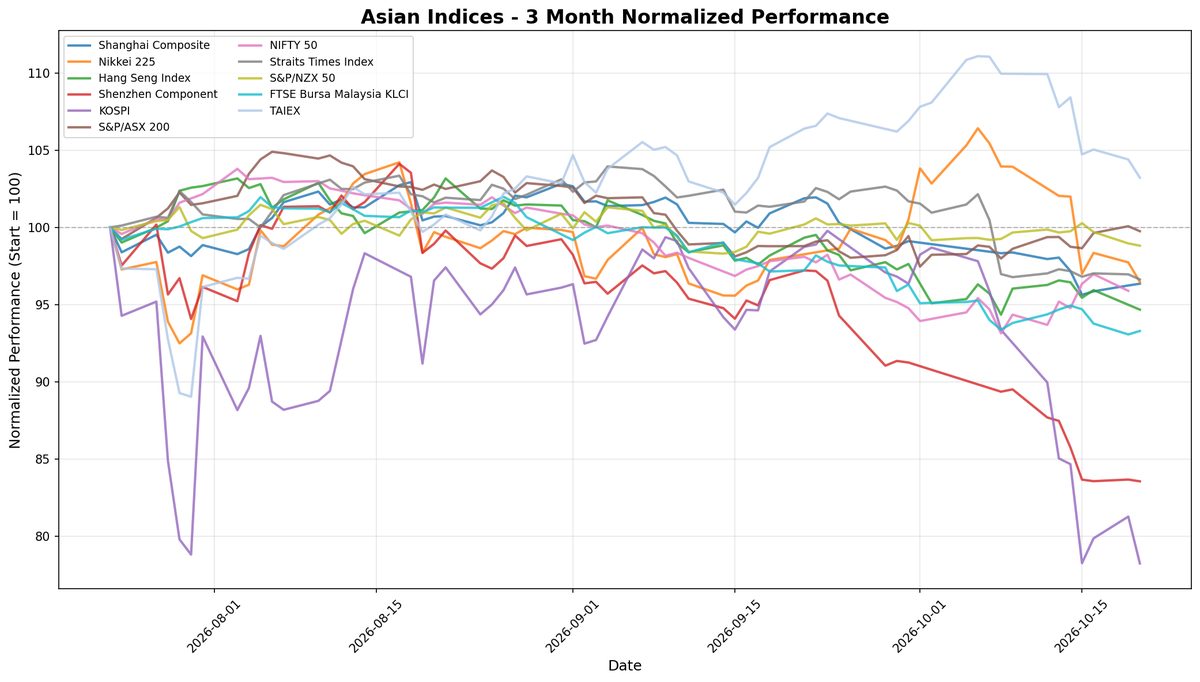
Asian Markets Steady as FTSE Bursa Malaysia KLCI Gains Amid Caution
Note: This analysis covers the Asian trading session close for October 20, 2026. All times are in US Eastern Time (ET).
📊 Asian Indices Performance
| Index | Price | Daily Change (%) |
|---|---|---|
| Shanghai Composite | 3,735.37 | +0.12% |
| Nikkei 225 | 64,075.42 | -1.30% |
| Hang Seng Index | 23,867.74 | -1.32% |
| Shenzhen Component | 11,801.29 | -0.14% |
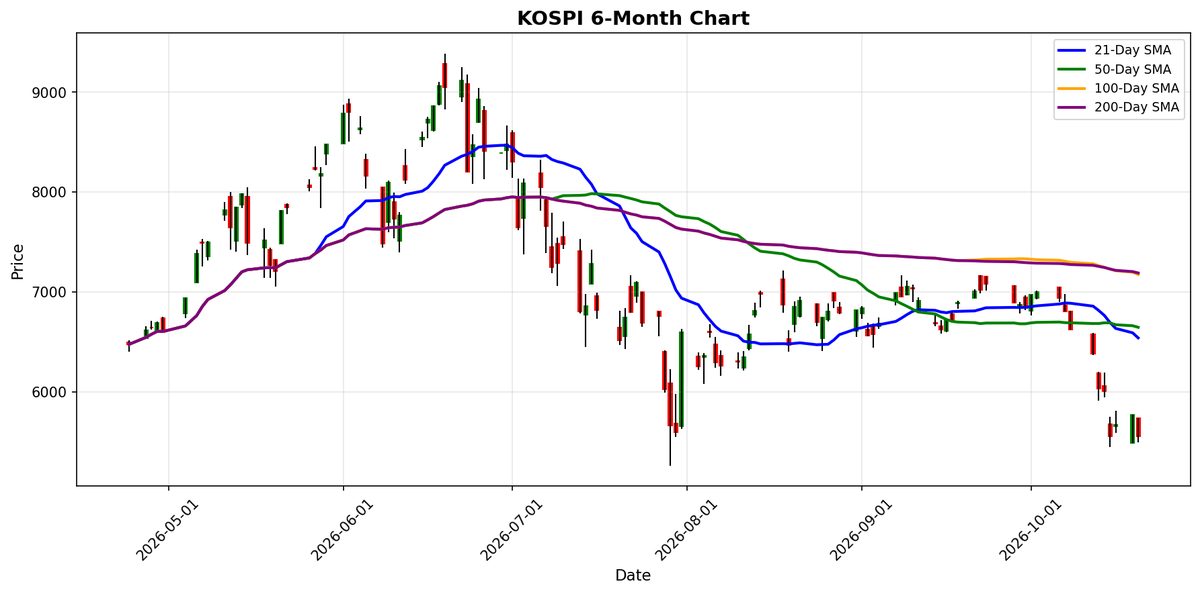
| KOSPI | 5,552.74 | -3.73% |
| S&P/ASX 200 | 8,816.90 | -0.33% |
| NIFTY 50 | 22,888.95 | -1.11% |
| Straits Times Index | 5,393.48 | -0.34% |
| S&P/NZX 50 | 13,631.69 | -0.15% |
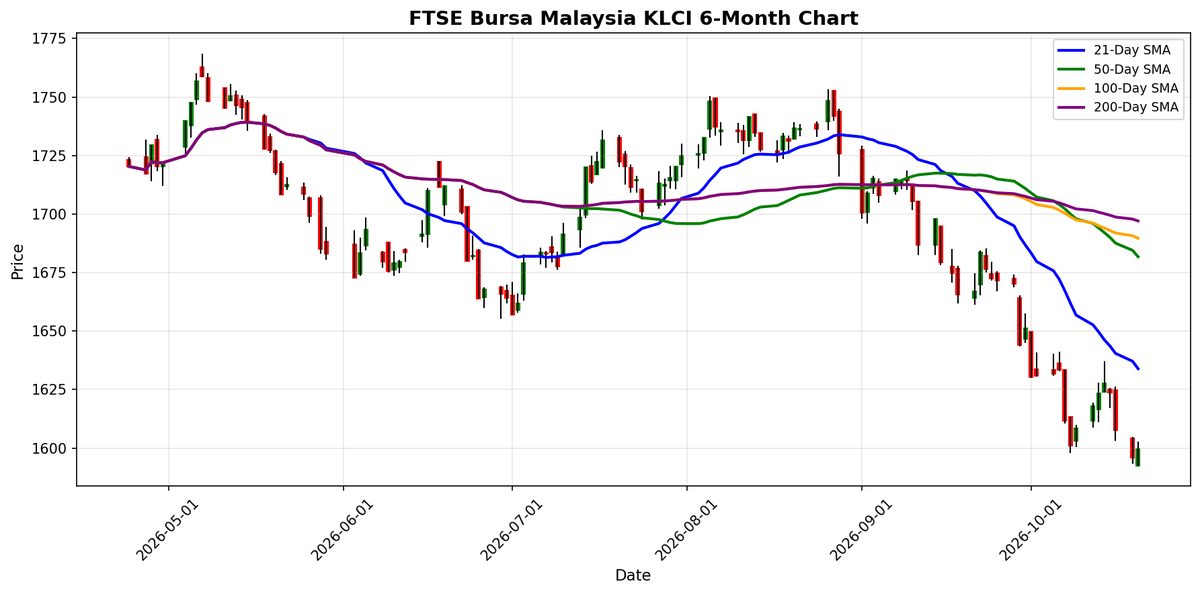
| FTSE Bursa Malaysia KLCI | 1,599.58 | +0.24% |
| TAIEX | 46,292.93 | -1.13% |
📰 Market Commentary
As of October 20, 2026, Asian markets are experiencing a notable downturn, influenced by a combination of skepticism surrounding artificial intelligence (AI) advancements, geopolitical tensions, and economic policy decisions across the region. **Key Events Impacting Asian Indices:** 1. **Tokyo Stock Market Decline:** The Nikkei 225 fell by 1.30%, reflecting investor skepticism about AI-driven growth and a cautious sentiment ahead of the earnings season. This trend is echoed in other markets, with the Hang Seng Index down 1.32% and the KOSPI experiencing a significant drop of 3.73%. 2. **Geopolitical Tensions:** Hong Kong's finance chief, Paul Chan, highlighted the downside risks posed by geopolitical tensions and trade uncertainties, which are contributing to market volatility and rising energy prices. 3. **Bank Indonesia's Pressure:** In Indonesia, the central bank faces increasing pressure to raise interest rates following a market rout triggered by MSCI's threat to downgrade its market status, leading to a weakened rupiah. 4. **Singapore's Agricultural Stocks:** The Singapore Exchange's scrutiny of firms linked to haze issues has negatively impacted agricultural stocks, reflecting regulatory pressures in the region. **Market Sentiment and Price Movements:** Overall, market sentiment is bearish, with most indices showing declines: - The KOSPI led the losses, down 3.73%, as concerns over AI valuations continue to weigh on investor confidence. - The Straits Times Index and S&P/ASX 200 also experienced declines, down 0.34% and 0.33% respectively. - Conversely, the FTSE Bursa Malaysia KLCI managed a slight gain of 0.24%, indicating some resilience in that market. **Regional Economic Developments:** 1. **Japan's Economic Policy:** Prime Minister Sanae Takaichi announced that the government will not extend the consumption tax cut on food and beverages, a decision that could have implications for consumer spending and economic growth. 2. **China's Technological Advancements:** China is set to commercialize a new electron microscope, potentially challenging the dominance of US and Japanese technologies in the market, which could have broader implications for regional competitiveness in advanced manufacturing. 3. **Credit Default Swaps Surge:** In the backdrop of AI-related debt concerns, there has been a significant increase in trading volumes for credit default swaps linked to major tech companies, indicating heightened investor caution. In summary, the Asian markets on October 20, 2026, are under pressure from a mix of skepticism regarding AI growth potential, geopolitical uncertainties, and domestic policy decisions, leading to widespread declines across major indices.
📅 Economic Calendar - Asian Session
All times are in US Eastern Time (ET)
| Date | Time | Cur | Imp | Event | Actual | Forecast |
|---|---|---|---|---|---|---|
| 2026-10-20 | 19:50 | 🇯🇵 | Medium | Adjusted Trade Balance | -0.26T | |
| 2026-10-20 | 19:50 | 🇯🇵 | Medium | Exports (YoY) (Sep) | 20.1% | |
| 2026-10-20 | 19:50 | 🇯🇵 | Medium | Trade Balance (Sep) | -181.0B |
On October 20, 2026, several key economic events from Japan have significant implications for traders in Asian markets. 1. **Adjusted Trade Balance**: - **Actual**: Data not provided - **Forecast**: -0.26 trillion JPY - **Market Implication**: A worse-than-expected adjusted trade balance could indicate ongoing challenges in Japan's export sector, potentially leading to a weaker Japanese yen and negative sentiment in Japanese equities. 2. **Exports (YoY) for September**: - **Actual**: Data not provided - **Forecast**: 20.1% - **Market Implication**: If actual exports fall short of the forecast, it could signal weakening global demand for Japanese goods, impacting the Nikkei 225 and related sectors negatively. Conversely, a figure above 20.1% would bolster confidence in Japan's economic recovery. 3. **Trade Balance for September**: - **Actual**: -181.0 billion JPY - **Forecast**: Data not provided - **Market Implication**: The reported trade balance indicates a significant trade deficit. If this figure is worse than anticipated, it may exert downward pressure on the yen and could lead to declines in Japanese stock indices as concerns over trade competitiveness increase. Overall, traders should closely monitor these data releases, particularly the actual figures for adjusted trade balance and exports, as they will provide crucial insights into Japan's economic health and influence market sentiment across Asian indices.
📈 Index Performance Charts
Best Performer: FTSE Bursa Malaysia KLCI
Worst Performer: KOSPI
💱 FX, Commodities & Crypto
### FX Pairs Performance **Key Price Movements:** - **USD/JPY**: Currently at 158.0860, showing a slight decline of -0.23%. - **USD/CNY**: Trading at 6.6781, with a minimal change of -0.03%. - **AUD/USD**: Increased to 0.6995, reflecting a gain of 0.19%. - **NZD/USD**: Rose to 0.5684, up by 0.34%. **Market Drivers:** The FX market is influenced by a combination of interest rate expectations, economic data releases, and geopolitical factors. The stability of the USD remains under scrutiny as traders assess the Federal Reserve's monetary policy direction against global economic indicators. The Australian and New Zealand dollars have shown resilience, likely supported by commodity prices and improving economic outlooks in their respective regions. ### Commodities Performance **Key Price Movements:** - **Gold**: Priced at $4,143.30, down by -0.40%. - **Silver**: Increased to $57.40, up by 0.74%. - **Crude Oil (WTI)**: Currently at $100.42, experiencing a significant drop of -3.13%. **Market Drivers:** Gold's slight decline can be attributed to a stronger USD and rising interest rates, which typically dampen demand for non-yielding assets. Conversely, silver's modest gain reflects its dual role as both an industrial metal and a precious metal, benefitting from ongoing industrial demand. The sharp drop in crude oil prices is primarily driven by concerns over global demand amid potential economic slowdowns and increased supply from OPEC+ nations
Currency Pairs
| Pair | Price | Daily Change (%) |
|---|---|---|
| USD/JPY | 158.09 | -0.23% |
| USD/CNY | 6.68 | -0.03% |
| AUD/USD | 0.70 | +0.19% |
| NZD/USD | 0.57 | +0.34% |
Commodities
| Commodity | Price | Daily Change (%) |
|---|---|---|
| Gold | $4143.30 | -0.40% |
| Silver | $57.40 | +0.74% |
| Crude Oil (WTI) | $100.42 | -3.13% |
Cryptocurrencies
| Asset | Price | Daily Change (%) |
|---|---|---|
| Bitcoin | $81,336 | -0.63% |
| Ethereum | $2,381 | -0.98% |
Disclaimer
The content on MarketsFN.com is provided for educational and informational purposes only. It does not constitute financial advice, investment recommendations, or trading guidance. All investments involve risks, and past performance does not guarantee future results. You are solely responsible for your investment decisions and should conduct independent research and consult a qualified financial advisor before acting. MarketsFN.com and its authors are not liable for any losses or damages arising from your use of this information.