S&P/ASX 200 Rises as Asian Markets Respond to Global Economic Signals
MarketsFN Team
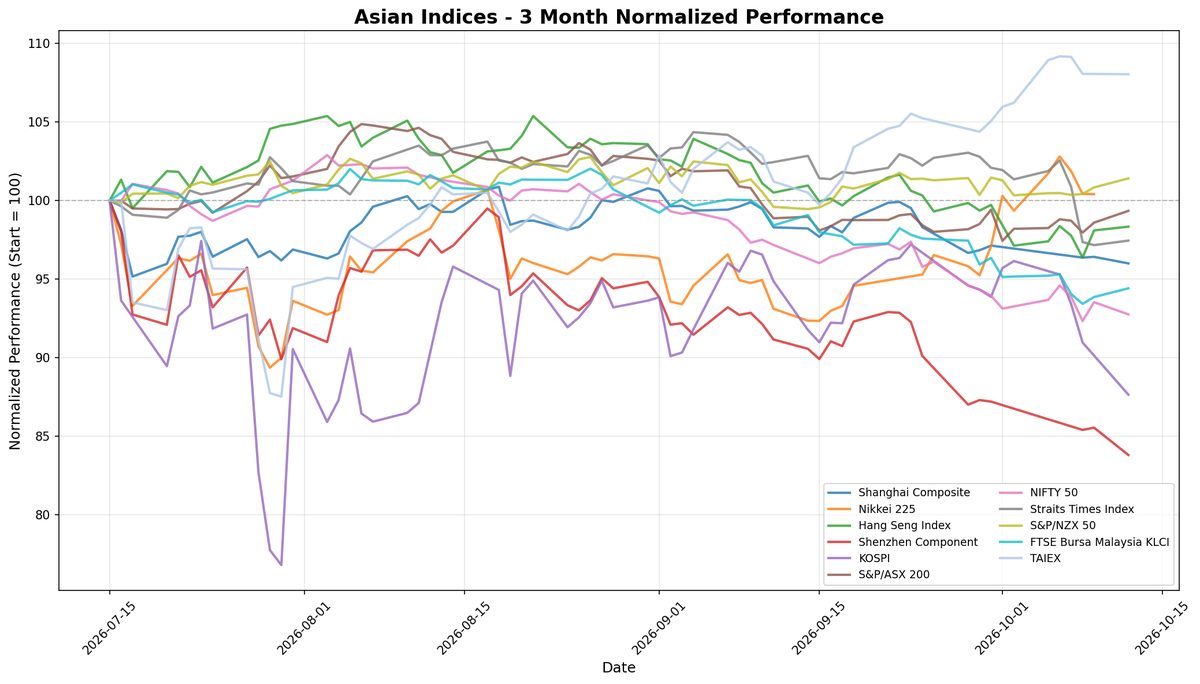
S&P/ASX 200 Rises as Asian Markets Respond to Global Economic Signals
Note: This analysis covers the Asian trading session close for October 12, 2026. All times are in US Eastern Time (ET).
📊 Asian Indices Performance
| Index | Price | Daily Change (%) |
|---|---|---|
| Shanghai Composite | 3,797.24 | -0.43% |
| Nikkei 225 | 69,030.92 | -0.02% |
| Hang Seng Index | 24,271.20 | +0.25% |
| Shenzhen Component | 12,384.87 | -2.03% |
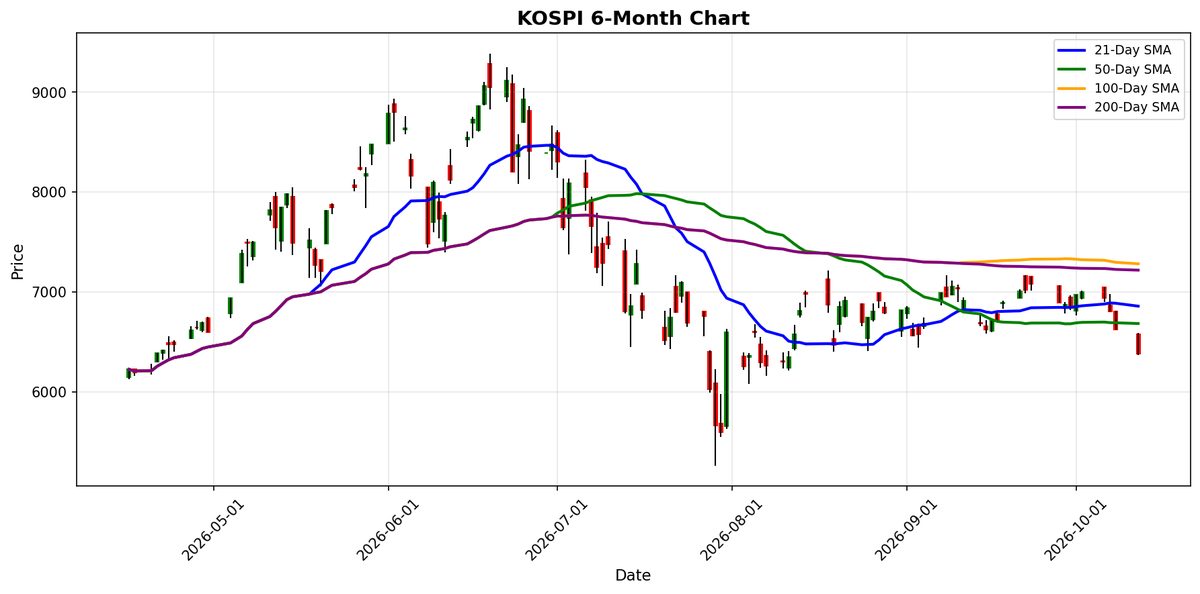
| KOSPI | 6,384.24 | -3.65% |
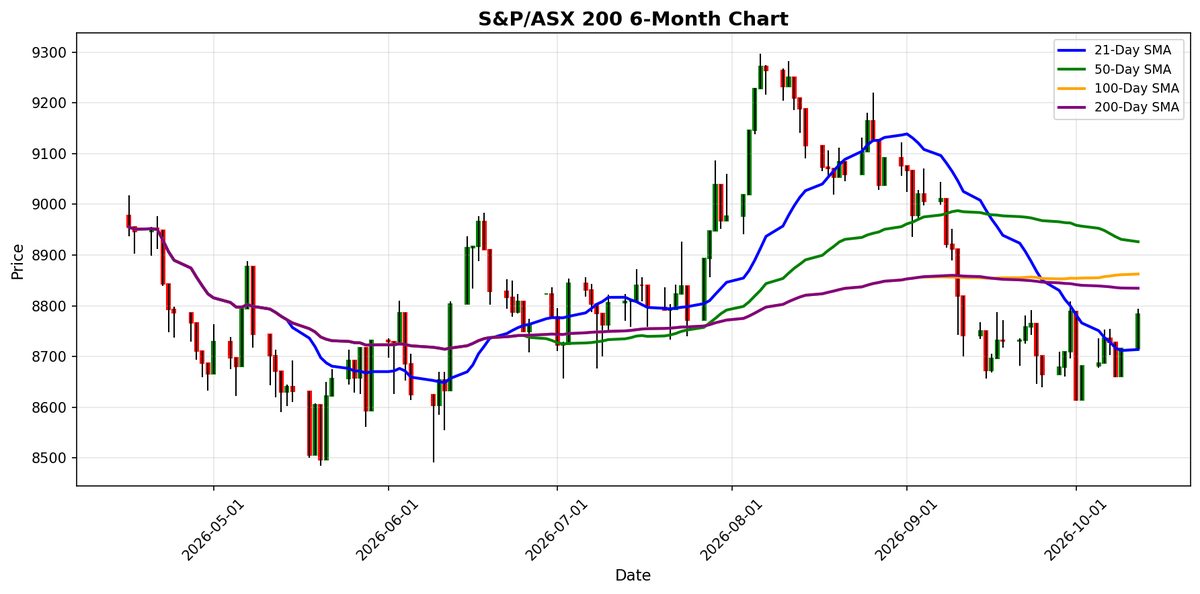
| S&P/ASX 200 | 8,783.20 | +0.76% |
| NIFTY 50 | 22,332.25 | -0.84% |
| Straits Times Index | 5,417.96 | +0.30% |
| S&P/NZX 50 | 13,827.62 | +0.57% |
| FTSE Bursa Malaysia KLCI | 1,618.01 | +0.59% |
| TAIEX | 49,301.96 | -0.02% |
📰 Market Commentary
On October 12, 2026, the Asian markets exhibited mixed performance influenced by a combination of regional developments and global economic sentiments. ### Key Events Impacting Asian Indices 1. **Regulatory Concerns in Indonesia**: Indonesian stocks faced significant pressure, with the benchmark index dropping to a three-month low amid speculation that major companies could incur regulatory fines. This uncertainty has rattled investor confidence and contributed to a broader decline in the market. 2. **India's Currency Defense**: The Reserve Bank of India (RBI) has taken decisive measures to defend the Indian rupee, setting a clear threshold at 97 per dollar. This strong stance has implications for market stability and investor sentiment in the region. 3. **Gold Market Dynamics**: The ongoing strategic push by China to diversify its gold reserves has led to record imports, impacting global gold prices and market sentiment. Traders are closely monitoring these developments as they assess the potential impact on inflation and currency valuations. ### Market Sentiment and Price Movements - **Shanghai Composite**: Down by 0.43%, reflecting broader concerns in the regional economic landscape. - **Nikkei 225**: Slightly decreased by 0.02%, indicating a cautious approach among investors amid global economic uncertainties. - **Hang Seng Index**: Managed a modest gain of 0.25%, buoyed by selective buying despite the surrounding volatility. - **Shenzhen Component**: Experienced a sharper decline of 2.03%, primarily driven by regulatory fears. - **KOSPI**: Plummeted by 3.65%, the most significant drop among the indices, as investor sentiment soured. - **S&P/ASX 200**: Rose by 0.76%, reflecting resilience in the Australian market, possibly due to commodity price stability. - **NIFTY 50**: Fell by 0.84%, as market participants reacted to the RBI's aggressive currency defense. ### Regional Economic Developments 1. **Hong Kong's Gold Ambitions**: Hong Kong is positioning itself as a key player in gold trading, leveraging China's consumer market and its own offshore vaulting infrastructure. This initiative is part of a broader strategy to enhance financial services and attract international investment. 2. **Singapore's Financial Innovations**: The Singapore Exchange is launching new Asian bond futures to facilitate trading for European investors, showcasing the city-state's commitment to enhancing its financial market offerings and attracting global capital. 3. **AI Implementation Challenges**: In Singapore, treasury teams are transitioning from AI trials to implementation, although they face significant barriers such as system integration and skills shortages. This shift reflects a growing recognition of AI's potential in financial operations, despite the challenges. Overall, the Asian markets on October 12, 2026, reflect a complex interplay of local and global factors, with regulatory concerns and economic strategies shaping investor sentiment and market movements across the region.
📅 Economic Calendar - Asian Session
All times are in US Eastern Time (ET)
| Date | Time | Cur | Imp | Event | Actual | Forecast |
|---|---|---|---|---|---|---|
| 2026-10-12 | 06:30 | 🇮🇳 | Medium | CPI (YoY) (Sep) | 5.40% |
On October 12, 2026, the Indian economy released its Consumer Price Index (CPI) data for September. The CPI (YoY) came in at a level that has not yet been specified, while the forecast anticipated a figure of 5.40%. For traders, this event is critical as it provides insights into inflationary pressures within the Indian economy. A CPI reading that exceeds the forecast could suggest rising inflation, potentially prompting the Reserve Bank of India to consider tightening monetary policy, which would impact interest rates and, consequently, investor sentiment. Conversely, a lower-than-expected CPI would indicate subdued inflation, allowing for more accommodative monetary policy, which could boost market confidence. The implications for Asian indices are significant. Should the actual CPI reading be higher than 5.40%, it may lead to bearish sentiment in Indian equities and could also affect broader Asian markets, as investors reassess their risk exposure in response to potential inflationary pressures. On the other hand, if the CPI is below expectations, it could provide a bullish impetus for Indian stocks and positively influence regional indices as well. Traders should closely monitor the actual CPI figure once released, as it will dictate market reactions and inform trading strategies across Asian markets.
📈 Index Performance Charts
Best Performer: S&P/ASX 200
Worst Performer: KOSPI
💱 FX, Commodities & Crypto
### FX Pairs Performance - **USD/JPY**: Currently trading at 158.4870, the pair shows a slight daily increase of 0.17%. This movement reflects ongoing market sentiment regarding interest rate differentials and economic outlooks between the U.S. and Japan. - **USD/CNY**: Priced at 6.6918, this pair has also seen a modest daily increase of 0.18%. The performance is influenced by China's economic data and its impact on the yuan, alongside U.S. monetary policy expectations. - **AUD/USD**: The Australian dollar is trading at 0.6974, experiencing a daily decline of 0.20%. This drop can be attributed to weaker commodity prices and concerns over Australia's economic resilience amid global uncertainties. - **NZD/USD**: Currently at 0.5602, the New Zealand dollar has decreased by 0.18%. Similar to the AUD, the NZD is affected by commodity price fluctuations and broader risk sentiment in the market. ### Commodities Performance - No commodities data is available for analysis at this time. ### Cryptocurrency Performance - **Bitcoin**: Priced at $83,385, Bitcoin has experienced a slight daily decline of 0.35%. Market drivers include regulatory developments and macroeconomic factors affecting investor sentiment. - **Ethereum**: Currently trading at $2,552, Ethereum shows a positive daily change of 0.66%. The increase is likely driven by ongoing developments in decentralized finance (DeFi) and potential upgrades to its network, which enhance its utility and attractiveness to investors. ### Summary In summary, FX pairs exhibit mixed performance with slight gains in USD/JPY and USD/CNY, while AUD
Currency Pairs
| Pair | Price | Daily Change (%) |
|---|---|---|
| USD/JPY | 158.49 | +0.17% |
| USD/CNY | 6.69 | +0.18% |
| AUD/USD | 0.70 | -0.20% |
| NZD/USD | 0.56 | -0.18% |
Cryptocurrencies
| Asset | Price | Daily Change (%) |
|---|---|---|
| Bitcoin | $83,385 | -0.35% |
| Ethereum | $2,552 | +0.66% |
Disclaimer
The content on MarketsFN.com is provided for educational and informational purposes only. It does not constitute financial advice, investment recommendations, or trading guidance. All investments involve risks, and past performance does not guarantee future results. You are solely responsible for your investment decisions and should conduct independent research and consult a qualified financial advisor before acting. MarketsFN.com and its authors are not liable for any losses or damages arising from your use of this information.